
This blog post explores why we romanticize the past, arguing that nostalgia for "simpler times" is really a signal for what we're missing today: genuine human connection. Moving beyond individual and tribal thinking toward broader community care, embracing the complexity in political and social systems rather than oversimplifying them, and recognizing that "the good old days" looked very different depending on who you were. The piece closes with a challenge to take one small, concrete step toward rebuilding connection in your own community this week.
As I have grown older and seen more and more perspectives on how to be here now and on each person's relationship with now, I have started to think about whether life seemed simpler in the past, or to look at the Make America Great Again group. Looking back at our past can reflect what we're missing right now. It doesn't mean the past was really what we remember it as; it's an attempt to get at something we feel we're missing today.
Solo Identity vs Connection
We look back and think times were better. We want to make things right again, bring things back. What are we ultimately looking for? I think it's different for every person, but at the core, there's a feeling of connecting with people, connecting with our society. We're living in a society that keeps pushing us to be solo, families by themselves, people by themselves, consuming entertainment all by ourselves. This is where we need to start rebuilding engagement and building connection, especially across groups with disparate ideas and viewpoints.
Building that connection doesn't happen by staying in our own focused view point of what's best for me, what's best for my community. It's about taking what's best for me and expanding it out to the larger humanity, because that's ultimately where we exist. That doesn't mean being responsible for every single person in that larger humanity, but the more we expand toward it, the more it ultimately helps us. It connects back.
Honoring the Complexity
Our communities and systems we create are filled with complexity. When it comes to politics, we simplify or promote simple ideas. I want to pay less in taxes; I want to have more support programs; I believe in free markets. These are all ideals, and in a good society you will constantly want to balance them to create a more stable society. I am promoting us to strengthen connections across all groups and experiences so that things flow better across each one. Itis about having a balance of regulations, experimentation, and wealth sharing, with support programs.
One thing to consider: we already produce enough food on this planet to feed everyone. Yet people are still starving. That's not a supply problem; it's political. It's people deciding where that food goes, who has access. If we got that right and supported everyone, imagine how much more benefit there'd be in this world.
Myth of Past Leads to Our Needs Today
This is where we, as individuals, need to understand the role we play in these systems, and what small shifts we can start making to help improve them for everybody. No one is an individual; we all rely on each other. The more we support each other, the more we rise as a group.
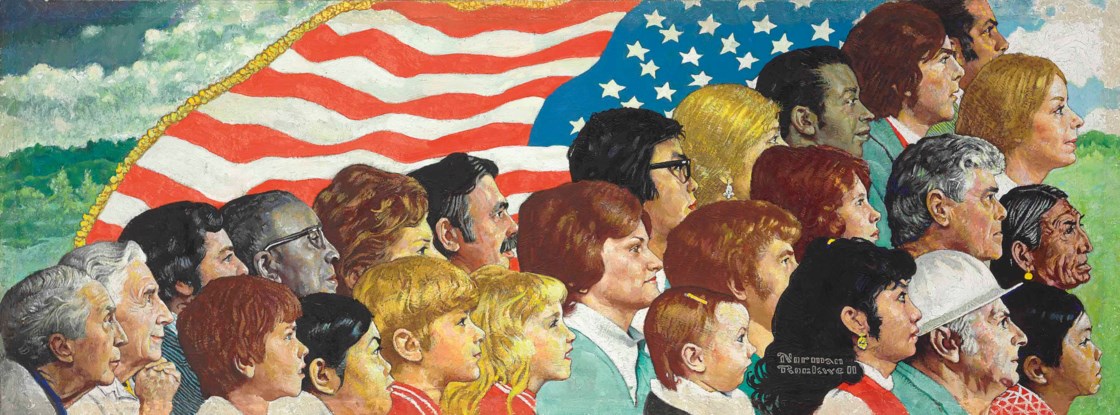
For me, it starts by looking at my own community. Fourth of July parades are coming up, and one visual that many people have is the Norman Rockwell-painting version of a small town. How great it was: kids could go wherever they wanted. What is that ultimately getting back to? Connection. Freedom of movement. Wanting to connect with each other, even people who want to be on their own still find something of value in that social fabric.
That version of the past isn't the same for everyone, though. Who felt free to roam those streets, who was welcomed without a second look, that depended a lot on background, on how people were seen. I say that from my own experience and from what I hear from the people I work with: what gets remembered as "the good old days" varies widely, and for some, those days weren't good at all. There's also a pattern worth naming: the older we get, the more fondly we tend to look back, in part because we hold on to the memories we want to keep, which just keeps reinforcing the story of how good things used to be.
Challenge: One Small Step
So let's start with one small step. What's something that I feel missing from the past that I can do today? For me, it would be building community, connection, a conversation with a friend, getting to know my neighbors. It may be different for you, but when you look back, what is the core of what you are missing, and what could shift for you? How can you lift everyone up, as that will grow, especially if you start with one person, make one new connection, be open to listening and finding the balance rather than pushing on the throttle?
I challenge you to think about that this week. It starts with us. Think globally, act locally; it's so true. The more we do that, the more we create the future we actually want.
Change doesn't start with a perfect plan, it starts with one honest conversation.